


Periods of sustained stress can change how the brain processes information. During these periods, changes in attention, memory, and mental clarity are commonly reported,, which helps explain why anxiety and brain fog are often discussed together.
These changes reflect how the anxiety and the brain respond to perceived threat, not a loss of intelligence or ability. Brain fog frequently appears during demanding phases of life, often raising questions about its meaning
Understanding the mechanisms behind these symptoms can reduce confusion and support informed conversations with clinicians.
Educational frameworks focused on cognitive stress responses, such as SensIQ, describe these changes as part of normal brain responses to stress rather than signs of disease. This article is an academic overview. It explains what brain fog is, how anxiety affects thinking, and when it may help to seek clinical input.
Key Takeaways
- Anxiety can change how the brain allocates attention and energy, which helps explain why anxiety and brain fog often appear together during periods of stress.
- Brain fog is a descriptive term for cognitive symptoms such as difficulty concentrating, slower thinking, and forgetfulness, and these experiences can fluctuate based on stress and sleep quality.
- Ongoing anxiety may affect brain signaling, sleep, and fatigue, which can extend cognitive symptoms over time, especially when stress remains high.
- Hormonal changes, social stress, and poor sleep can intensify brain fog, making symptoms more noticeable in certain life stages or situations.
- Persistent or worsening cognitive symptoms that interfere with daily life should be discussed with a qualified healthcare professional for proper evaluation.
Can anxiety cause brain fog?
How stress shifts mental focus
Research suggests that anxiety can affect how the brain processes information¹. When anxiety increases, the brain shifts attention toward possible threats. This shift can leave fewer mental resources for focus, planning, or memory. As a result, brain fog may occur during stressful periods.
Anxiety and brain signaling changes
Stress hormones also play a role. Ongoing anxiety can change blood flow patterns in the brain, which may affect thinking speed². Individuals with an anxiety disorder often report difficulty concentrating when stress feels constant. These patterns are common across anxiety-related brain studies.
How brain fog feels
Common cognitive symptoms
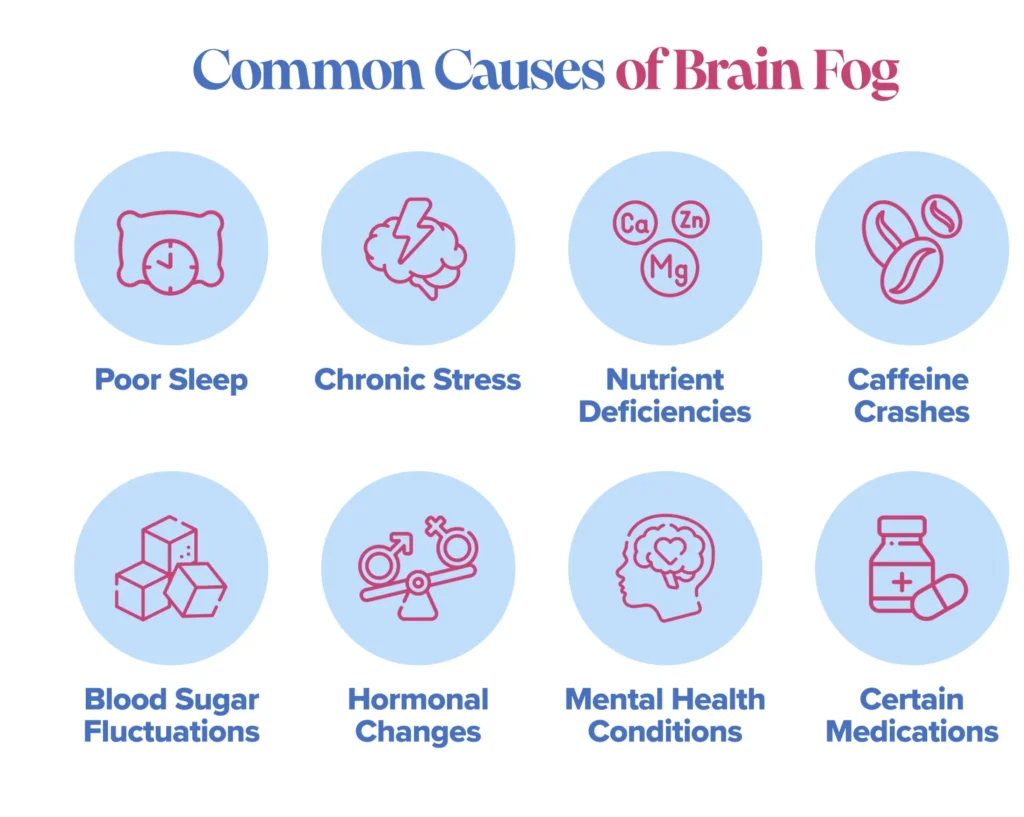
Brain fog is not a diagnosis but a descriptive term often used when discussing the causes of brain fog. The term describes changes in thinking.
Common symptoms of brain fog include forgetfulness, slow thinking, or trouble staying focused. A foggy mind associated with anxiety is often described as feeling mentally heavy or dull.
Effects on daily functioning
Mental fogginess and anxiety often show up during demanding tasks. Work, multitasking, or decision-making may take more effort than usual. These changes can affect daily functioning, even when physical health seems unchanged. Similar fog and anxiety experiences are commonly observed during stressful times.
How anxiety disrupts brain function
Nervous system response to stress
Anxiety changes how brain areas communicate. Regions involved in threat detection become more active. Areas responsible for attention and planning may receive less support. This shift can lower cognitive performance during everyday tasks.
The role of sleep and fatigue
Sleep also affects this process. Poor sleep can reduce attention and memory storage. Over time, chronic fatigue may make it harder to regain mental clarity³. These changes are usually functional and not permanent.
How long does anxiety brain fog last?
Short-term vs. long-term patterns
The duration of brain fog linked to anxiety varies depending on stress levels and individual factors. Symptoms often improve once stress decreases, but they can persist for several weeks or longer in some cases. There is no fixed timeline, as short-term and long-term patterns depend on the intensity and persistence of anxiety.
Factors that influence duration
Long-term symptoms are more likely when anxiety remains high. Sleep quality, mental health issues, and ongoing stress all matter. Increased anxiety can keep the brain in a heightened state, which extends symptoms. Understanding this can reduce worry about lasting damage.
Anxiety and brain fog during menopause
Hormonal changes and cognition
Hormonal changes during menopause can affect brain chemistry. These shifts may increase anxiety and brain fog during menopause for some women. Estrogen changes influence mood and attention, which can affect clarity⁴. Not everyone experiences these effects in the same way.
Sleep, mood, and overlap
Sleep problems are also common during this stage. Poor sleep combined with anxiety and depression can increase mental strain. This overlap can make symptoms harder to explain. Multiple factors may be involved simultaneously.
Social anxiety and brain fog
Cognitive load in social settings
Social anxiety places extra demand on attention. Worry about judgment or performance can take up mental space. This can lead to difficulty concentrating during social situations. Brain fog may appear before or during interactions.
After the stress passes
After the situation ends, clarity often returns. Repeated stress can reinforce these patterns over time. Understanding this process helps explain why symptoms occur without blaming personal ability.
How do you fix brain fog from anxiety?
Clinical evaluation and context
This article does not offer treatment advice. Healthcare professionals often start by understanding what drives anxiety and how it affects daily life. They may look at sleep habits, stress levels, and other mental health conditions. This helps guide next steps.
General support strategies
General habits may support nervous system balance, and educational resources on stress-related nutrients, including discussions on ashwagandha and brain fog, can provide additional guidance.
Rest, balanced meals with lean proteins, and gentle practices like deep breathing can help stability. Ongoing symptoms that affect physical health or daily functioning should be discussed with a qualified clinician.*
When to seek clinical evaluation
Signs it may be time to ask for help
Occasional brain fog during stress is common. It may be time to seek evaluation if symptoms persist or worsen, or if they interfere with work or relationships. Clinicians can assess anxiety, sleep, mood, and other factors. This helps clarify possible causes.
Why individualized care matters
Because mental health conditions often overlap, individual evaluation matters. Professional guidance can help rule out other concerns. This supports informed decisions rather than guesswork.
Understanding limitations and variability
What research can and cannot show
Research on anxiety and brain fog is still developing. Studies suggest links, not guarantees. Not everyone with anxiety will experience brain fog. Not all brain fog comes from anxiety, and it can be helpful to distinguish it from related experiences, such as brain fog vs dissociation.
Setting realistic expectations
Results vary from person to person. Education helps set realistic expectations. Clear information supports better conversations with healthcare professionals.
References
- American Psychological Association. (2024). How stress affects your health.
https://www.apa.org/topics/stress/health - Cleveland Clinic. (2024). Brain fog.
https://my.clevelandclinic.org/health/symptoms/brain-fog - Fletcher, J. (2025). Why anxiety can make your mind foggy. Psychology Today.
https://www.psychologytoday.com/us/blog/and-how-does-that-make-you-feel/202501/brain-fog-the-cloudy-symptom-of-anxiety - National Institute of Mental Health. (2024). Anxiety disorders.
https://www.nimh.nih.gov/health/topics/anxiety-disorders
*These statements have not been evaluated by the Food and Drug Administration. This product is not intended to diagnose, treat, cure, or prevent any disease.