


Brain fog often involves changes in focus or clarity of thought. Slower thinking, reduced mental sharpness, and increased effort for routine tasks are common features. These effects are usually subtle but can influence confidence and daily functioning.
This article explains how brain fog is experienced, what factors may contribute to it, and when medical review can be helpful.
Key Takeaways
- Brain fog describes changes in focus, thinking speed, and mental clarity, rather than a specific disease or diagnosis. These changes often feel subtle but can affect daily activities and confidence.
- Common brain fog symptoms include slowed thinking, trouble remembering details, and mental fatigue, which may become more noticeable during routine tasks or periods of stress.
- Sleep disruption, ongoing stress, anxiety, and hormonal changes are frequent contributors to brain fog, and these factors often overlap rather than act alone.
- Brain fog is usually temporary, but symptoms can last weeks or months depending on underlying health conditions and lifestyle factors. Worsening or persistent symptoms should be reviewed by a medical professional.
- Brain fog differs from serious cognitive disorders like dementia, as it tends to fluctuate rather than progress steadily. Clinical evaluation helps clarify causes and guide next steps.
How Does Brain Fog Feel
Mental and Cognitive Changes
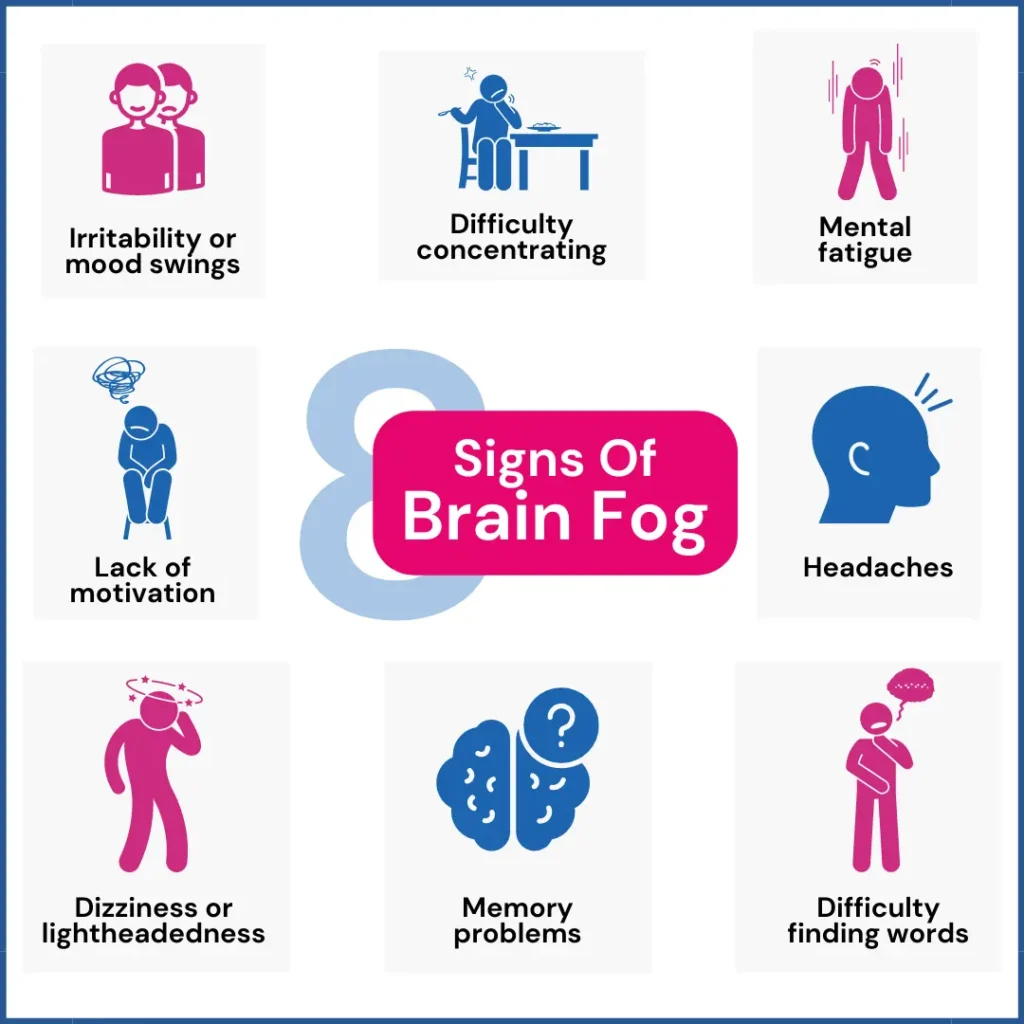
Brain fog often presents as changes in mental processing. Thoughts may feel slower or harder to organize, and concentration can drop even during simple tasks. Difficulty recalling small details may also appear.
These symptoms can fluctuate. Mental clarity may improve with rest and decline during periods of stress, making the experience feel unpredictable.
Although brain fog is cognitive, physical sensations may accompany it. Mental fatigue, low energy, or a heavy, dull feeling in the head can occur. Research suggests that fatigue can reduce the brain’s efficiency in processing information¹.
Brain Fog Symptoms in Daily Life
Focus, Memory, and Word Recall
Symptoms often become noticeable during routine activities. Focus may drop in meetings, tasks may be forgotten mid-action, or word recall can slow speech. Trouble remembering words can slow speech. These changes are common and usually mild.
Such issues can feel frustrating. They may affect work, home tasks, or social time. Seeing these patterns can help reduce worry.
Slowed Thinking and Mental Effort
Another common sign is the need for more mental effort. Planning or making choices may feel tiring. Multitasking may become harder. This reflects slower processing, not brain damage².
Symptom intensity may shift when contributing factors improve, though responses are not uniform.
Why People Get Brain Fog
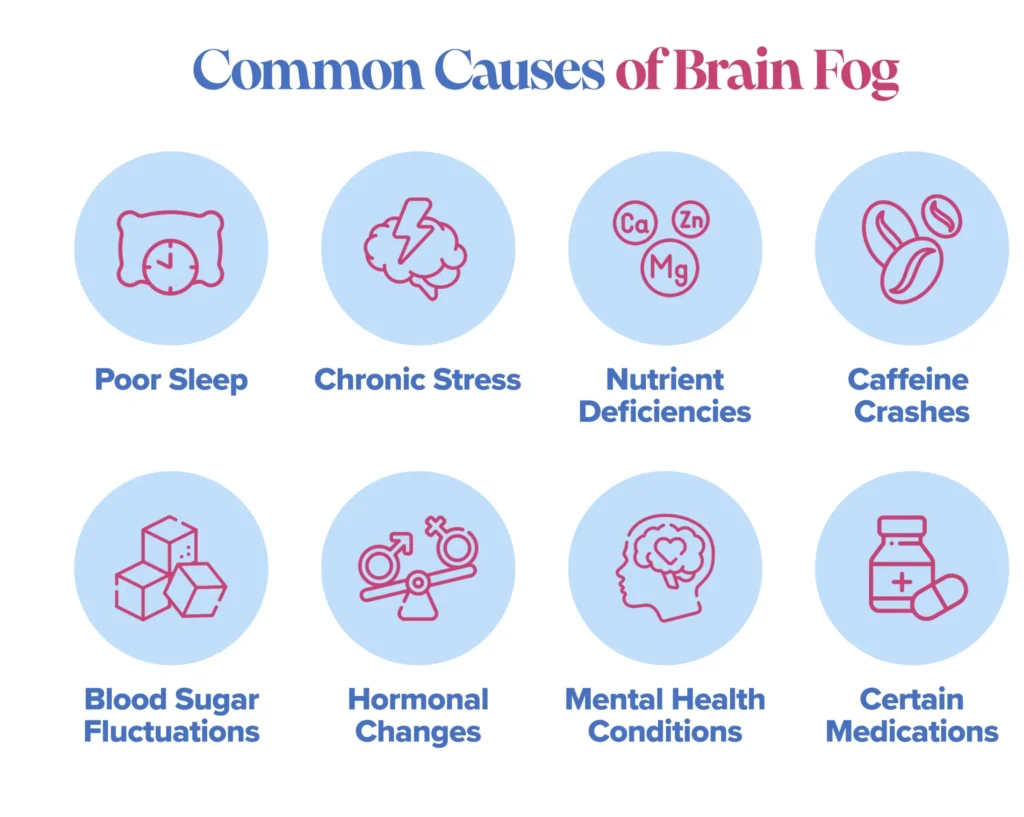
Several factors can play a role. According to research on brain fog causes, poor sleep can affect focus and memory, and ongoing stress or anxiety can drain mental energy. Studies suggest these issues can affect how the brain handles information³.
Hormones also affect thinking. Estrogen and progesterone help support brain signaling. Changes in these hormones can influence focus, mood, and mental clarity.
Brain Fog During Hormonal Transitions
How Brain Fog Feels in Perimenopause
Cognitive changes can emerge during perimenopause and are often described ashormonal brain fog. Attention may vary from day to day. Sleep problems and mood shifts often happen at the same time. These factors can increase mental strain⁴.
How It May Change in Menopause
After menopause, hormone levels become more stable. Cognitive clarity may improve for some, while others consider supplement options for menopause brain fog as part of broader lifestyle adjustments. Experiences vary based on individual context.
Is Brain Fog Dangerous, Permanent, or Long-Lasting
When Brain Fog Is Usually Temporary
In most cases, brain fog is temporary. It often links to stress, sleep loss, or hormone changes. It usually does not point to a serious medical condition.
How Long Can Brain Fog Last
Duration varies based on the underlying factor. Symptoms can persist for weeks or months and may change as sleep patterns, stress levels, or health conditions shift.
When Medical Review Is Needed
If symptoms worsen or disrupt daily activities, it may help to talk to your doctor. New or severe symptoms of brain changes should be checked. A clinician can review your health and decide if tests are needed.
How Brain Fog Is Evaluated and Managed
There is no single test for brain fog. Doctors often review symptoms of brain function, sleep habits, stress levels, medicines, and overall health. Dr. Luke Barr, Chief Medical Officer at SensIQ, notes the value of looking at the full picture rather than assuming a single cause. This helps guide safe decisions.
Why “Quick Fixes” Are Often Misleading
Claims of instant answers can miss the full issue. Brain fog often stems from multiple interrelated factors. Research suggests symptom changes relate more to addressing root causes than to fast fixes. Individual responses differ.
Brain Fog vs Serious Cognitive Conditions
Brain fog is not the same as serious cognitive conditions such as dementia. While dementia involves a progressive decline in memory and thinking abilities over time, brain fog tends to fluctuate and may improve or worsen from day to day. Because symptoms can sometimes overlap, a healthcare professional can help determine when further evaluation is needed.*
References
- Cleveland Clinic. (2024). Brain fog. Cleveland Clinic. https://my.clevelandclinic.org/health/symptoms/brain-fog
- Detroit Medical Center. (n.d.). Brain fog and when to worry. DMC, Detroit Medical Center. https://www.dmc.org/healthy-living/corporate-content/when-should-you-worry-about-brain-fog
- Loftus, M. (n.d.). Lost in a brain fog. Emory University News Center. https://news.emory.edu/features/2023/07/emag-brain-fog-13-07-23/index.html
- Bilodeau, K. (2021). Sleep, stress, or hormones? Brain fog during perimenopause. Harvard Health Publishing. https://www.health.harvard.edu/blog/sleep-stress-or-hormones-brain-fog-during-perimenopause-202104092429
*These statements have not been evaluated by the Food and Drug Administration. This product is not intended to diagnose, treat, cure, or prevent any disease.