


Many people notice changes in focus, memory, or mental sharpness under pressure. Stress and brain fog often co-occur, leading many to wonder how closely they are linked. Research suggests that stress can affect brain function, reducing attention and mental clarity, especially when prolonged.
These changes are usually temporary, but the experience can feel unsettling. This article explains what stress-related brain fog is, why it happens, and how clinicians understand it.
This article is written as an educational guide to help explain how stress affects thinking and focus. SensIQ is mentioned here only as a neurologist-developed framework used in some clinical settings to describe and track changes in cognitive functions over time.
Key Takeaways
- Stress and brain fog often occur together because stress hormones can affect attention, memory, and overall brain function, especially during prolonged or intense stress.
- Brain fog from stress commonly shows up as difficulty concentrating, mental fatigue, or forgetfulness, and these symptoms usually fluctuate rather than stay constant.
- The severity and duration of stress matter, as chronic or extreme stress is more likely to disrupt cognitive functions than short-term stress.
- Hormonal changes, including those during perimenopause, can increase sensitivity to stress and make brain fog more noticeable even when overall health appears normal.
- Clinical evaluation focuses on identifying contributing factors such as stress, sleep, and mental health, rather than assuming a single cause or promising specific outcomes.
Is Brain Fog a Symptom of Stress?
Stress can be linked to cognitive symptoms that many people describe as brain fog. While brain fog is not a medical diagnosis, it is a common way people describe changes in thinking and focus.
Research shows that stress hormones can affect how the brain processes information, which helps explain these symptoms¹. When people ask whether stress causes brain fog, the answer depends on the person and the situation. Stress is one factor, not the only cause.
How Stress Disrupts Cognition
Stress activates systems in the body that release cortisol. When cortisol stays high, it can interfere with normal brain signaling². This may lead to slower thinking, reduced focus, or memory problems.
Short bursts of stress can sometimes improve alertness, but repeated stress often has the opposite effect. This explains why symptoms may come and go.
Brain Fog Symptoms Linked to Stress
Stress-related brain fog can show up in different ways. Brain fog from stress often includes mental tiredness, forgetfulness, or feeling less sharp than usual. These symptoms do not mean a loss of ability or intelligence. They reflect strain on standard thinking systems. Sleep problems often make these symptoms worse.
What Brain Fog From Stress Feels Like
Many people report difficulty concentrating or staying focused on tasks, which reflects common descriptions of how brain fog feels during periods of stress.
Others notice more mistakes, slower thinking, or trouble remembering recent details. These problems with attention usually fall within a normal stress response. The severity can change from day to day.
Emotional Stress and Brain Fog
Emotional stress can increase brain fog by affecting mood and focus. Anxiety or low mood can take up mental energy that would otherwise support thinking tasks. Mental health strain often overlaps with cognitive symptoms. This overlap can make it harder to tell where one issue ends and another begins.
How Stress Severity Affects Brain Fog
The impact of stress on thinking depends on its intensity and duration. Mild stress may cause brief lapses in focus. More intense stress can affect several areas of thinking at once. Understanding this range of responses helps explain why experiences differ between people.
Chronic Stress and Brain Fog
Chronic stress can affect thinking over the long term. Ongoing cortisol exposure has been linked to changes in memory and attention systems². Over time, this may affect planning, focus, and mental speed. Recovery often involves reducing stress and addressing related factors.
Extreme Stress and Brain Fog
Extreme stress can overwhelm the brain for short periods. People may feel mentally blocked, scattered, or unable to process information well. These reactions are part of the body’s protective response. They usually improve once stress levels drop.
What Is the Biggest Cause of Brain Fog?
There is no single cause that explains all cases of brain fog and related symptoms. Stress often interacts with sleep loss, emotional strain, and physical health issues, a pattern also discussed in broader educational content on ashwagandha and brain fog without framing any single factor as a solution.
Brain fog and cognitive changes are better understood as the result of several factors working together. This view supports careful clinical evaluation.

Multiple Triggers, Not One Cause
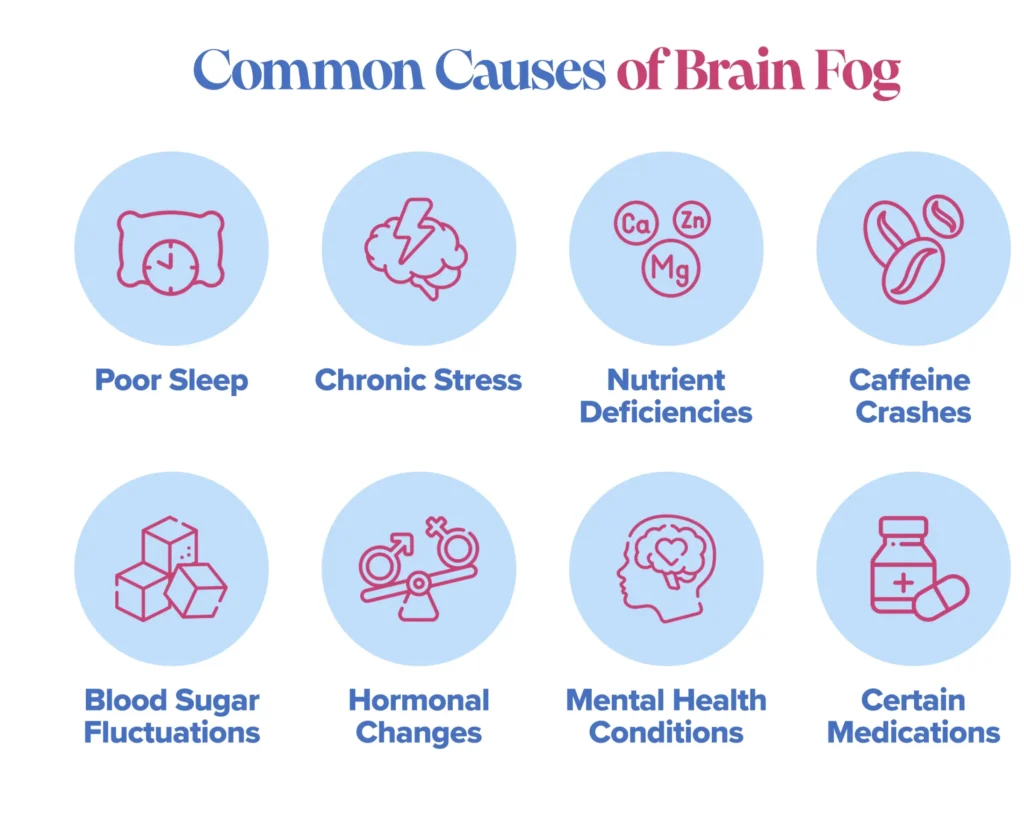
Brain fog usually develops from a mix of influences rather than one trigger. Stress may be compounded by poor sleep, mood changes, or hormonal shifts. Looking at the whole picture helps avoid simple explanations. It also supports a better understanding of symptoms.
Why Hormonal Changes Increase Sensitivity
Hormones play an essential role in brain signaling and focus. Changes in hormone levels can affect how the brain responds to stress. When hormone levels fluctuate, stress effects on thinking may feel stronger. This helps explain why some life stages bring more sensitivity.
Stress and Brain Fog During Perimenopause
During perimenopause, hormone levels can vary widely. Many women report brain fog and difficulty concentrating during this time³. These changes reflect altered regulation, not loss of brain ability. Understanding this context can reduce confusion and worry.
Why Stress-Related Brain Fog Is Often Missed
Stress-related cognitive symptoms are often overlooked. They may not show up on routine tests. As a result, symptoms can be dismissed or misunderstood. This can leave people without clear answers.
Misattribution to Anxiety or Burnout
Brain fog is often labeled as anxiety or burnout without deeper review. While these terms can overlap, they do not explain every case. Misattribution can delay proper evaluation. Clear explanations help improve recognition.
How Brain Fog Is Addressed Clinically
Clinical care focuses on understanding contributing factors rather than directly improving cognition, which aligns with broader discussions on how to combat brain fog through evaluation and context rather than quick fixes.
Evaluation often includes stress history, sleep patterns, mental health, and overall health¹. The goal is to identify patterns and rule out other conditions. Care plans vary based on findings.
Clinical Evaluation and Support
Clinicians may use structured tools to assess attention, memory, and other cognitive functions over time. According to Dr. Luke Barr, Chief Medical Officer and a medical expert in cognitive assessment, structured evaluation helps separate temporary stress effects from other causes.
This approach emphasizes context and monitoring. Support is adjusted to each person’s needs.*
References
- Cleveland Clinic. (n.d.). Brain fog: What it is, causes, symptoms & treatment. https://my.clevelandclinic.org/health/symptoms/brain-fog
- McEwen, B. S., & Morrison, J. H. (2013). The brain on stress: Vulnerability and plasticity of the prefrontal cortex over the life course. Biological Psychiatry, 74(10), 728–734. https://doi.org/10.1016/j.biopsych.2013.03.028
- Weber, M. T., & Mapstone, M. (2009). Memory complaints and memory performance in the menopausal transition. Menopause, 16(4), 694–700. https://doi.org/10.1097/gme.0b013e318196a0c9
*These statements have not been evaluated by the Food and Drug Administration. This product is not intended to diagnose, treat, cure, or prevent any disease.